
History and models
Mercedes-Benz
Mercedes-Benz was born in 1926 from the merger of the two companies that invented the car: Karl Benz’s and Gottlieb Daimler’s. Its three-pointed star and many of its safety inventions, such as ABS and the crumple zone, went on to become standard on every car.
Here is its history year by year: the brand’s milestones, how its logo has changed and the generations of every model Move has in its catalogue, with specs and maintenance plan.
How the Mercedes-Benz logo has changed
11 versions of the logo, from the first to today’s.
-
 1883–1909
Benz & Cie.: the name of Karl Benz’s company
-
 1902–1909
Mercedes (DMG): the name in an oval
-
 1909–1926
Mercedes (DMG): the three-pointed star
-
 1909–1926
Benz: the name inside a laurel wreath
-
 1926–1933
The merger: the Mercedes star inside the Benz laurel
-
 1933–1969
Just the star inside a thin ring
-
 1969–1989
Bold star
-
 1989–1998
The star with the name below
-
 1998–2011
Embossed star
-
 2011–2025
Chrome star
-
 2025–today
Flat star, designed for screens
Mercedes-Benz models
Each with its generation timeline, specs and maintenance plan.
W123
1976–1986 · 2 generations · 53 versions
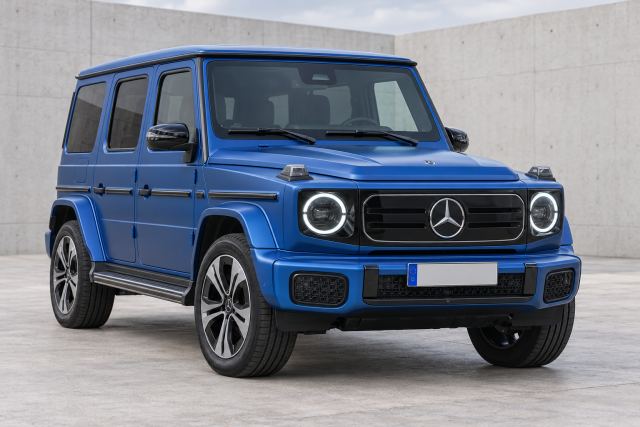 Clase G
1979–today · 8 generations · 84 versions
190
1982–1993 · 2 generations · 24 versions
Clase E
1984–today · 10 generations · 238 versions
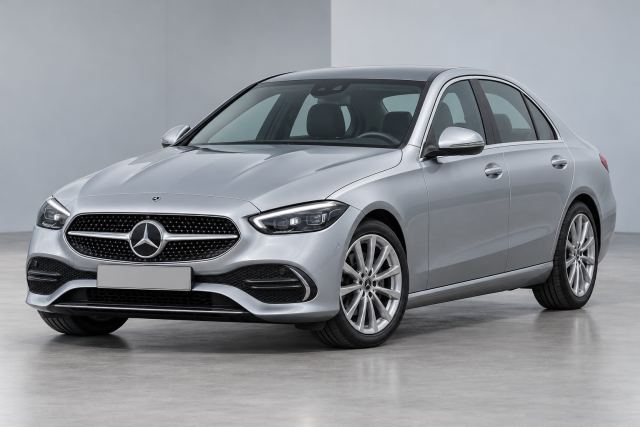
Clase C
1993–today · 9 generations · 184 versions
Clase A
1997–today · 8 generations · 106 versions
Viano
2003–2014 · 2 generations · 43 versions
GLA
2014–today · 4 generations · 38 versions
GLC
2015–today · 3 generations · 54 versions
Mercedes-Benz history year by year
The brand’s milestones, its logo changes and the launch of every generation of its models.
The 1880s
Benz & Cie.
Karl Benz founds Benz & Cie. in Mannheim, building stationary engines.
The first car
Karl Benz patents the Benz Patent-Motorwagen, regarded as the first car. The same year Gottlieb Daimler and Wilhelm Maybach fit an engine to a carriage.
Bertha Benz’s drive
Bertha Benz drives some 100 km from Mannheim to Pforzheim with her two sons: the first long-distance car journey, proving the invention works.
The 1890s
Daimler-Motoren-Gesellschaft
Gottlieb Daimler founds Daimler-Motoren-Gesellschaft (DMG) near Stuttgart.
The 1900s
The Mercedes name is born
Businessman Emil Jellinek orders a car from DMG and names it after his daughter, Mercedes. In 1902 Mercedes becomes a registered trademark.
The three-pointed star
DMG registers the three-pointed star, standing for engines on land, at sea and in the air.
The 1920s
Merger: Daimler-Benz
DMG and Benz & Cie. merge into Daimler-Benz AG, and their cars become Mercedes-Benz.
The 1930s
The “Silver Arrows”
The W25 racers run in bare aluminium instead of Germany’s traditional white, giving rise to the “Silver Arrows” nickname.
The first diesel passenger car
The 260 D is the first series-production passenger car with a diesel engine.
The 1950s
The 300 SL “Gullwing”
The sports car with upward-opening doors and one of the first petrol engines with direct injection.
The crumple zone
The W111 saloon is the first production car with a rigid passenger cell and front and rear crumple zones, patented by Béla Barényi.
The 1960s
The 1970s
ABS in the S-Class
The S-Class (W116) is the first production car offered with electronic ABS anti-lock brakes, developed with Bosch.
The 1980s
The airbag
The S-Class (W126) introduces a driver’s airbag and seat-belt pretensioners.
The 190, the first compact
The 190 (W201) brings the brand to a wider audience. In 1993 its successor introduces the C-Class name.
The 1990s
The A-Class and the “moose test”
The first A-Class rolls over in a Swedish magazine’s evasive-manoeuvre test. Mercedes fixes it by fitting ESP stability control as standard.
DaimlerChrysler
Daimler-Benz merges with America’s Chrysler. The tie-up is undone in 2007.
The 2000s
The 2010s
Eight straight Formula One titles
With the arrival of hybrid engines, the Mercedes team wins the Formula One constructors’ championship every year from 2014 to 2021.
The 2020s
Mercedes-Benz Group
After spinning off its trucks as Daimler Truck, Daimler AG is renamed Mercedes-Benz Group AG.