History and models
Volkswagen
Volkswagen was founded in 1937 to build a car everyone could afford and became one of the largest carmakers in the world. From the Beetle and the Type 2 van it moved on to the Golf, which defined the European compact, and today it is betting on the electric ID. range.
Here is its history year by year: the brand’s milestones, how its logo has changed and the generations of every model Move has in its catalogue, with specs and maintenance plan.
How the Volkswagen logo has changed
10 versions of the logo, from the first to today’s.
-
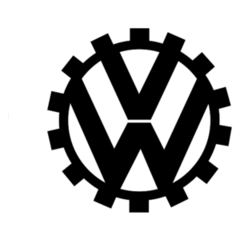 1939–1945
VW in a cogwheel
-
 1945–1960
The cogwheel goes: just the circle
-
 1960–1967
Circle inside a square
-
 1967–1978
First blue logo
-
 1978–1989
Deep blue
-
 1989–1995
Light blue
-
 1995–1999
Blue with a gradient
-
 1999–2000
Refined gradient
-
 2000–2012
Embossed look
-
 2019–today
Flat logo, designed for screens
Volkswagen models
Each with its generation timeline, specs and maintenance plan.
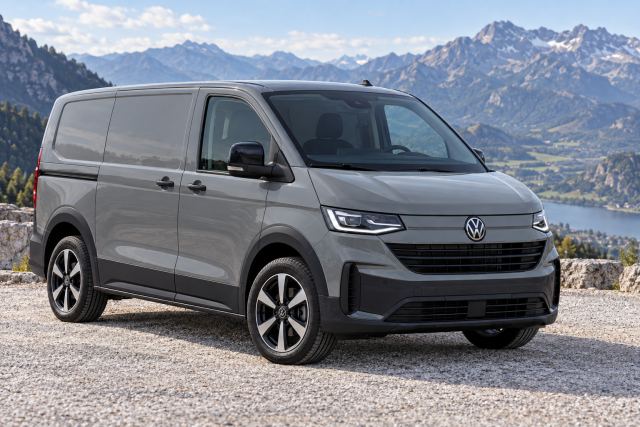 Transporter
1950–today · 14 generations · 163 versions
Passat
1973–today · 11 generations · 202 versions
Golf
1974–today · 12 generations · 253 versions
Polo
1975–today · 12 generations · 152 versions
Jetta
1979–2017 · 8 generations · 85 versions
Caravelle
1981–today · 9 generations · 69 versions
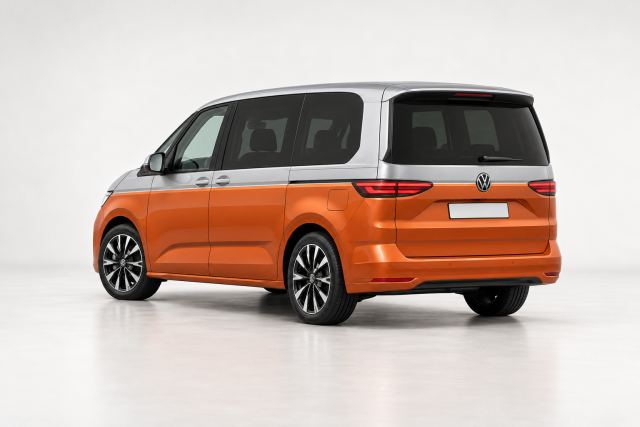 Multivan
1985–today · 8 generations · 68 versions
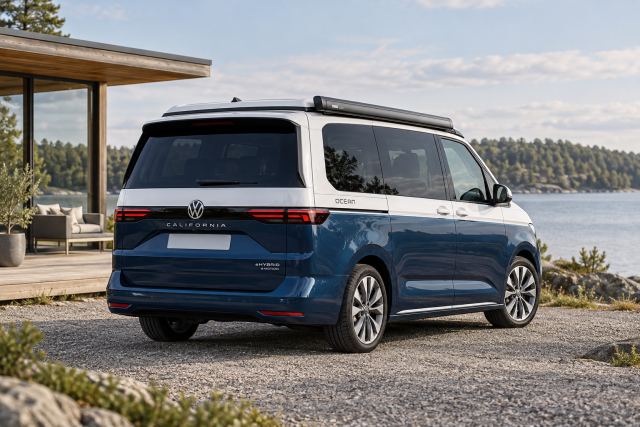
California
1988–today · 8 generations · 33 versions
Sharan
1995–2022 · 5 generations · 37 versions
T-Roc
2017–today · 3 generations · 26 versions
T-Cross
2019–today · 2 generations · 8 versions
Volkswagen history year by year
The brand’s milestones, its logo changes and the launch of every generation of its models.
The 1930s
Founded in Berlin
The National Socialist regime sets up the “Gesellschaft zur Vorbereitung des Deutschen Volkswagens” to mass-produce the people’s car designed by Ferdinand Porsche’s office.
Volkswagenwerk and the Wolfsburg plant
The company is renamed Volkswagenwerk GmbH and starts building its plant near Fallersleben, in the town known as Wolfsburg since 1945.
Wartime production
During the Second World War the plant builds military vehicles such as the Kübelwagen and Schwimmwagen, using thousands of forced labourers. Almost no private buyer ever receives a car.
The 1940s
The Beetle starts under British control
With the plant under British military administration, Major Ivan Hirst gets civilian production of the Type 1, the future Beetle, under way.
Back in German hands
The British hand control of the company to the Federal Republic of Germany and the state of Lower Saxony. With Heinrich Nordhoff in charge since 1948, exports begin.
The 1950s
The Type 2 Transporter arrives
Series production of the Type 2 (T1) begins in Wolfsburg: the van behind the Transporter, Multivan and California line.
One million Beetles
The one millionth Beetle rolls off the line in Wolfsburg.
The 1960s
Becomes a public company
The company becomes Volkswagenwerk AG and is floated in 1961; the federal government and Lower Saxony keep a stake.
Buys Auto Union (Audi)
Between 1964 and 1966 Volkswagen buys Auto Union from Daimler-Benz, the origin of today’s Audi.
The 1970s
Overtakes the Ford Model T
With 15,007,034 units built, the Beetle becomes the most-produced car in history up to then.
The Golf is born
Front engine and front-wheel drive, water cooling and a Giugiaro design: the Golf replaces the Beetle as the brand’s core car.
Last German-built Beetle
The Emden plant builds the last Beetle made in Germany. Production carries on in Mexico and Brazil.
The 1980s
SEAT joins the group
Volkswagen takes a majority stake in SEAT and owns the Spanish brand outright by 1990.
The 1990s
The T4 reinvents the van
The fourth Transporter is the first with a front engine and front-wheel drive, and the passenger version takes the Multivan name.
Škoda joins
Volkswagen buys into Czech maker Škoda, which becomes one of the group’s brands.
Bentley, Bugatti and Lamborghini
The group buys Bentley and Bugatti, and Lamborghini through Audi. The same year the New Beetle reaches Europe.
The 2000s
Farewell to the Beetle
The last original Beetle leaves the line in Puebla, Mexico, after more than 21.5 million units.
The 2010s
Emissions scandal
It emerges that millions of the group’s diesel engines carried software that cheated emissions tests.
ID.3 and a new logo
At the Frankfurt motor show it unveils the ID.3, its first electric car on the MEB platform, along with a flat new logo.
The 2020s
The van returns, electric
The ID. Buzz arrives as the electric heir to the Type 2.